2026 VEGETABLE LIST

Here is my list of vegetables I’ll be growing this year

TOMATOES
I organized the tomatoes by how many days to harvest from the day they are transplanted outside. Of course this is just an estimate depending on where you are growing them and other conditions. In the past, I’ve organized by color only, but wanted to get a better representation of early, mid, and late tomatoes. In the past, I’ve grown too many late tomatoes forcing me to wait all season. All are Heirlooms or Open-Pollinated (OP) except for a few hybrids which are listed. as such. I always try a few new ones-keeps my interest up!

CHERRY TOMATOES

—Black Cherry-dark purple-65-70 days to harvest
––Super Sweet 100s -red-cherry-65 days to harvest-very sweet and very prolific
—Moby-yellow-dwarf plant-65 days to harvest-slightly larger cherry tomato
NEW! California Sungold-supposedly a little bigger and crack resistant than original Sungold

EARLY SEASON

—Goliath Pio-HYBRID-red-65 days to harvest-excellent old fashion tomato flavor
NEW! Matina-red- 65-70 days to harvest-prolific early tomato
NEW! Prudens Purple-67 days to harvest-New to me!

MID-SEASON
—Black Krim-black/purplish-75 days to harvest
—Cherokee Carbon-Black/purple-75 days to harvest
—Cherokee Chocolate-brick color-70-75 days to harvest
—Jaune Flamme-orange-70 days to harvest-super prolific-super tasty
—Black Prince-70-75 days to harvest?
—Paul Robeson-black/brick color-75 days to harvest

LATE SEASON
NEW! Black Beauty-black-75-80 days to harvest
-I grew this years ago
NEW! Striped German-yellow with pink blush inside-big-78 days to harvest
—Virginia Sweets-yellow bi-color-80 days to harvest
______________________________________________________

OTHER VEGGIES

BEANS-William Woys Weaver-TBD-He sends rare bean seeds for me to grow out for his 501c3 every year

GREEN BEAN-Fresh eating
—Rattlesnake-fresh eating green/purple splashes on pods-good in heat/droughts

SUMMER SQUASH
—Friulana -Does not attract squash bugs as much as other varieties of summer squash in my garden. These produce an abundance of light yellow, “bumpy” fruit. They aren’t beautiful, but they taste great. Doesn’t get watery when cooked. This is the most common zucchini in the markets of Venice in summer.

WINTER SQUASH
—Waltham Butternut-Does not attract squash bugs as much as other varieties in my garden.

PEPPERS
-the last few years I’ve been trying different sweet peppers from around the world.
—Lava Red-from Italy-70-80 days to harvest-a variety of Corno D’ Toro/sweet-thick wall
—Jimmy Nardello- from Italy/80-90 days to harvest/sweet-thin wall
—Calabrian Caviar-from Italy/75-95 days to harvest/sweet-thick wall
—Piquillo Lodosa-from Spain/Basque/75 days to harvest/sweet-thin wall
—Poblano-from Mexico//65-80 days to harvest/mild heat-thick wall
—Criolla de Cocina-from Nicaragua-78 days to harvest-sweet-thin wall
—Doux D’ Espagne-from Spain/75 days to harvest/sweet-thick wall
—Shishitos-from Japan-small tapas green pepper
—Habanada-like Habanero but no heat-mall orange pepper
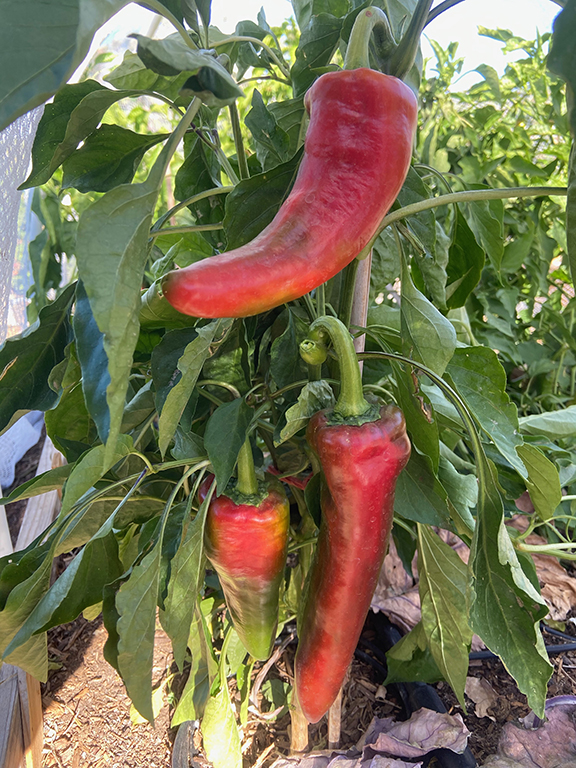
NEW! Bridge to Paris-from Italy-prolific red 8-9” thick skin
NEW! Giant Aconcagua– from Argentina huge red pepper
NEW! Marconi-from Italy-huge 8-12” peppers from Italy

CUCUMBERS-FRESH EATING
—Poona Kheera-our favorite fresh eating cuke to eat-never bitter

CUCUMBERS-PICKLING
—Bothsby Blonde-good for Bread n butter pickles/sweet pickle relish

CAULIFLOWER
—Freedom-white variety
—Cheddar-orange variety

WINTER/SPRING LETTUCES

—Santoro–butterhead
—Yugoslavian Red-butterhead
—Speckles Troutback-butterhead
—Italienischer-oakleaf

ARUGULA
—Rocket

SPINACH
—Bloomsdale-early
—Space-early

ONION
NEW! Purple Bunching onion (scallion)

SUMMER/FALL LETTUCES-Batavians or Summer Crisp lettuce (plant seeds in June)
—Salanova-Batavia-red and green
—Jester-Batavia
—Joker-Batavia

CHARD
—Ruby chard

—Argentata-white stems-most cold hardy
—Orange chard

KALE
NEW! Red Russian

OKRA
NEW! Jing Orange

RADISHES
Pusa Gulabi and Pusa Jamuni-beautiful tasty radishes
—Watermelon radish

PEAS
Super Sugar Snap-grows 5’ tall

CARROTS
—Dragon purple
—Kyoto Red
—Black Nebula
—Scarlet Red

BEETS

—Cylindra
—Badger Flame
—Chiogga

ASPARAGUS
NEW! Jersey Knight-plants will be delivered in March
What is Terroir?

TERROIR-what is it?

I want to explore what terroir (terr-wa) is, the history of terroir, the components of it and how it may affect the crops we grow. Other factors for me include if we can possibly influence terroir in our gardens here in New Mexico.

“Terroir” prounced ter wahr, is a French word that signifies the natural conditions like soil composition, elevation, sun exposure, climate, and other unique characteristics.

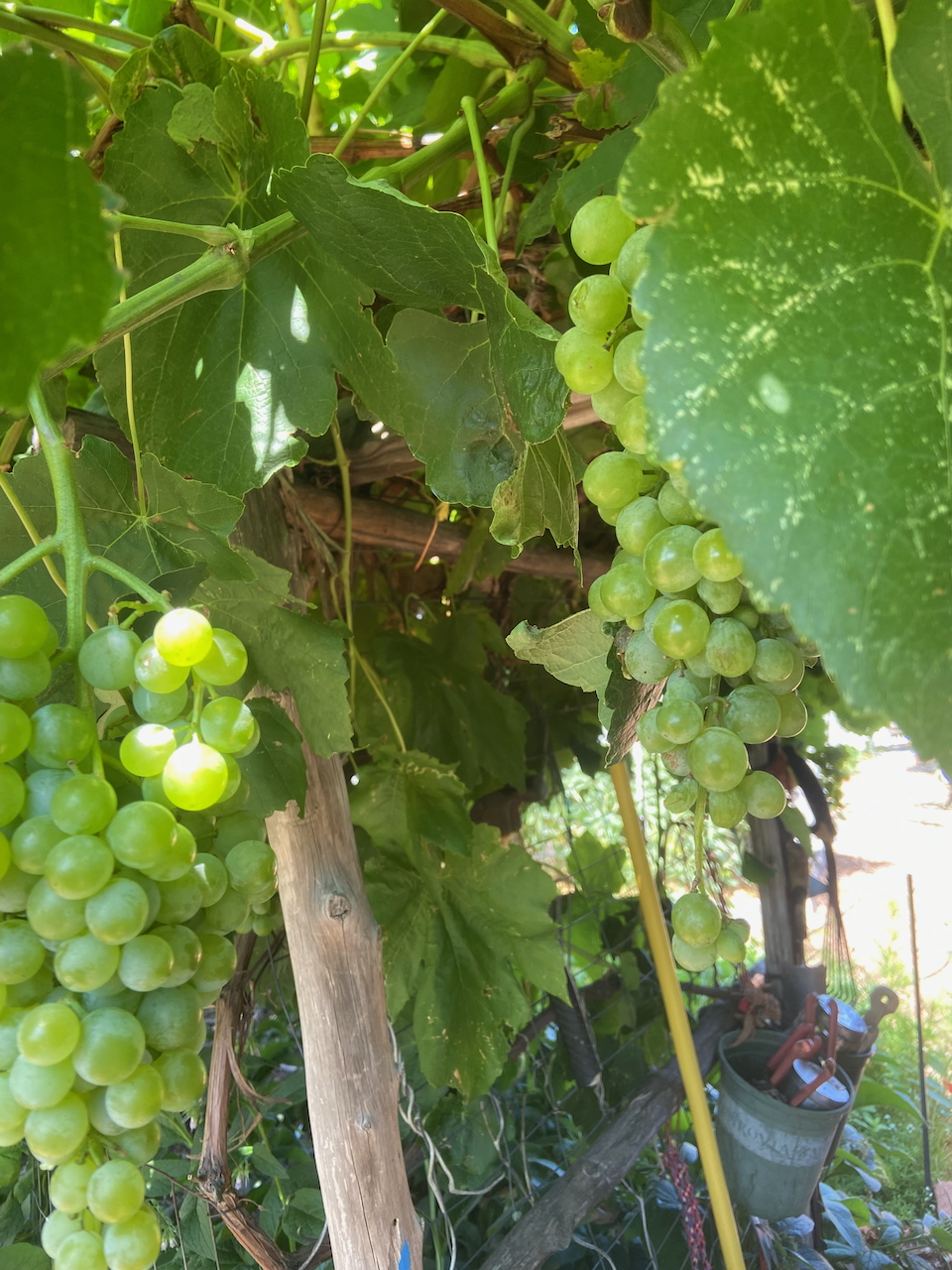
Champagne’s unique sparkling wine from its soil, Ethiopian coffee with distinct fruity notes from high altitudes, San Francisco sourdough benefiting from fog, and Alpine cheeses flavored by mountain herbs, showcasing how specific location (soil, climate, topography) shapes food and drink character beyond just ingredients.  These are examples of Terroir influence.

It was originally applied to French wines. But it doesn’t have to stop at wine. This can apply to other things like cheese-for instance the soft gooey cheese called Brie comes from the area of Brie France and Camembert cheese comes from the Normandy region of France-similar but different. Sourdough bread from San Francisco, some coffees from high altitudes, other cheeses from the alps ar affected by flowers the goat ea

History

Terroir began with wine, and like so many wine-related things, over the generations, we learned more and more about how these conditions — the climate, the soil type, the elevation — shaped the resulting wines.

The concept of terroir developed over the centuries as the Benedictine monks started observing the unique characteristics of their vineyard (called microclimate.)

They noticed the distinct flavors of the wines made from the same grape variety but in different regions and started using the term to define the unique characteristics of the soils.

It is said that the monks even went as far as to taste the soils and determine if the microbes were favorable for the grapes. Not recommended!

Over time, with these observations, wineries started labeling their wines according to the area of production, giving rise to the appellation system.

Terroir And The Appellation System

Appellation systems, such as the French AOC systems and the DOC systems is for Italy have developed around the concepts of “unique wines from a unique area”. These systems have also developed into protected designation of origin across the European Union so that, for example, winemakers from outside a region like Tuscany cannot produce the wine called Chianti even though they may be in Italy and use the same grape varieties.

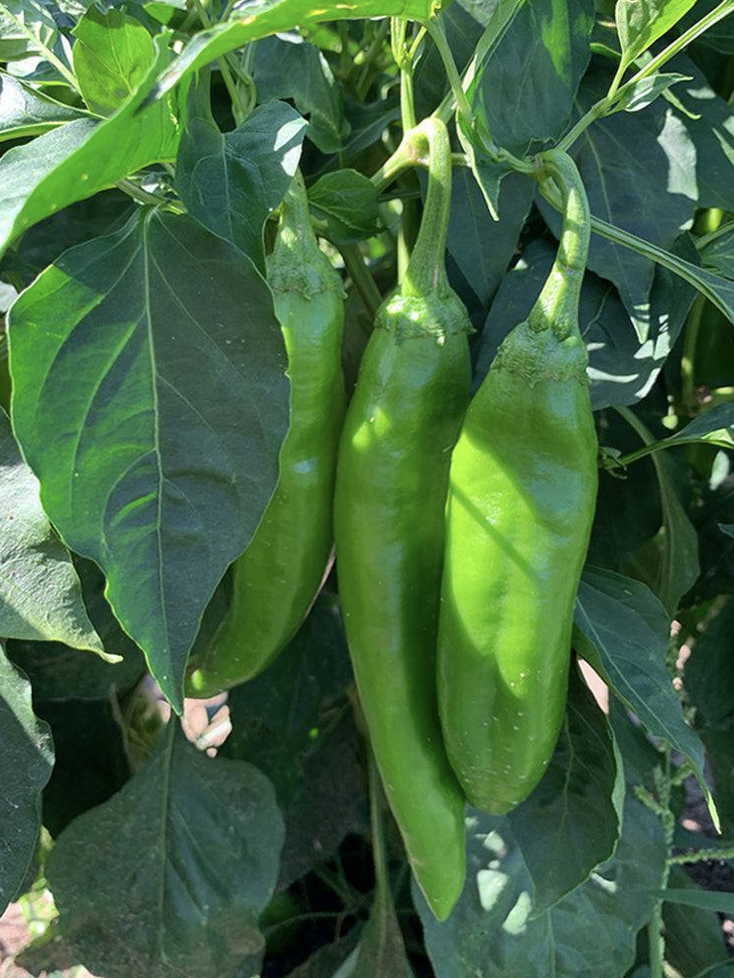
Hatch green chili-pic courtesy of Sandia Seed Company

What about Terroir in Your Garden?

Hatch Chiles are another example for me closer to home. If I grow a Hatch green chile here in New Mexico, it tastes different than that grown in Hatch, NM. as compared to us in Santa Fe- it will have certain attributes. If you grow the same chile in say New York, it won’t taste the same. We have very different soils than in NY and different climates, water, etc.  Also if I grow it in southern NM or Northern NM, it will be different.

Different people have different ideas on what elements constitute terroir. Terroir includes the following four major components of terroir—climate, soil, terrain or topography and organisms in the soil. Let’s break it down:

  1. Climate

Climate: both macroclimate (average temperature, amount of rainfall and sunlight in a general area) refer to the climate of a particular site.

  1. Soil

Soil: its physical and chemical composition, pH, depth, texture, layering, origin

The unique soil composition of a vineyard adds complex flavors to the crop.

  1. Terrain or Topography

The region’s terrain (the elevation and steepness of the vineyard) plays a vital role in the ripening of crops

The higher the elevation, the cooler the climate, and higher sun exposure can affect crops too.

  1. Organisms In the garden

Local flora and fauna: aromatic compounds of the surrounding contributing to the overall taste profile. For example, different strains of yeasts yield specific and distinctive flavors that also influence the aromatic profile especially in wines, cheese and bread.

Flora and fauna (including microbes) of the region also affect the ripening periods and concentration of the flavors.

I want to include a 5th  possible component

  1. Agricultural Practices or human factors

It relates to agricultural approach, which also includes farming practices as well, including pruning, cultivation, irrigation, and anything else that is done by the farmer while growing the crop

How a garden is farmed and cared for can have a dramatic impact on the terroir of the site.  While people have little control over the weather, they have much control over what they put into and take out of the soil.

Gardeners who use chemicals such as pesticides and herbicides may have more disease-free plants, but as these chemicals leach into the ground they can also inadvertently harm or kill beneficial organisms that are vital to the ecosystem.  This can lead to dead soils that don’t have enough nutrients or oxygen for the vine to thrive.

Gardeners who work organically, preserve our area’s incredible biodiversity, making for healthier plants year after year.  These stewards of the land use organic compounds like manure or compost to ensure the vine has the nutrients it needs and natural methods to control pests and weeds.

 How this applies to your own garden

Plants don’t grow the same in every garden. How they grow depends on your Garden Terroir. It also affects the yield you get, the flavor of the crop and much more.

Though the altitude, temperature, and precipitation may be the same in both your garden and your neighbor’s, the produce that is harvested will have different flavor profiles. The amount of sunlight and the soil type will affect the taste of your produce. Now we can’t plan for the amount of sunlight or rain our plants receive, or the altitude of your garden, or the climate in your area, all terrior components. However, there is one variable that you can control. The quality of your soil. Planting your produce in a higher quality soil will give the fruits and vegetables a very rich flavor. Your neighbors will all be wondering what makes your fruits and vegetables taste so much better than theirs.


JAN 31-Transplanted lettuces today to pony packs/spinach failed.

LETTUCES
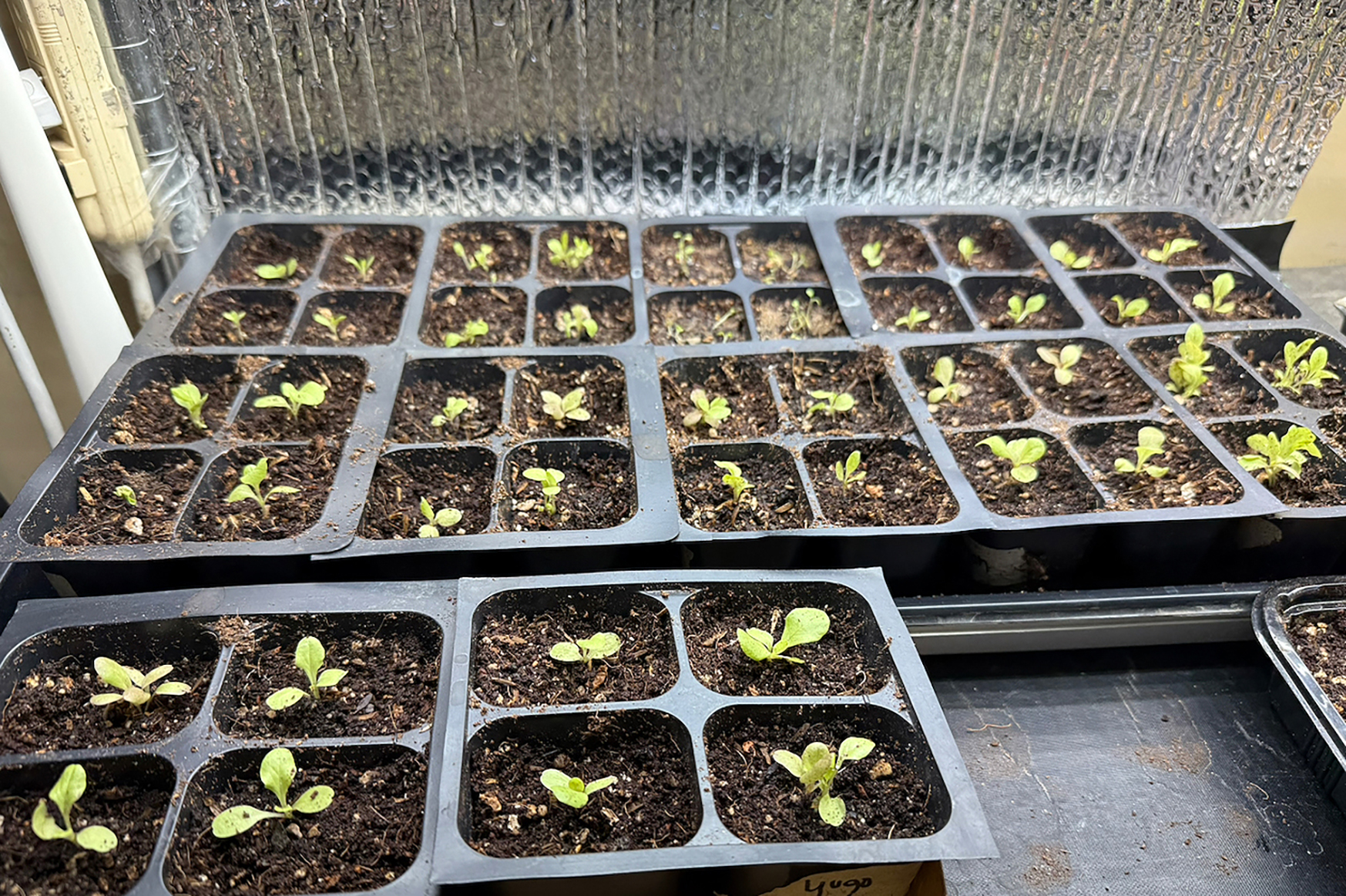
On Jan 31, I transplanted my teeny-tiny lettuce starts from their germination tray to 4 cell pony packs.

They are so small I had to be extra careful when pricking them out of the germination tray and transplanting into the pony packs. I have other posts with pics on the transplanting process. Then after transplanting them, I gave them a liquid mixture of B-1 and seaweed but no fish emulsion yet-too much nitrogen and I don’t want to stress the seedlings out more. The B-1/Seaweed combo is good for transplant shock. In fact I use it when planting other plants outside. Really helps. I planted more lettuces than I need, but am giving some to friends. I guess I didn’t follow my succession planting, thinking many would not germinate but I can’t complain. Now I just have to wait till they get big enough to transplant out. Maybe 3 weeks…


SPINACH
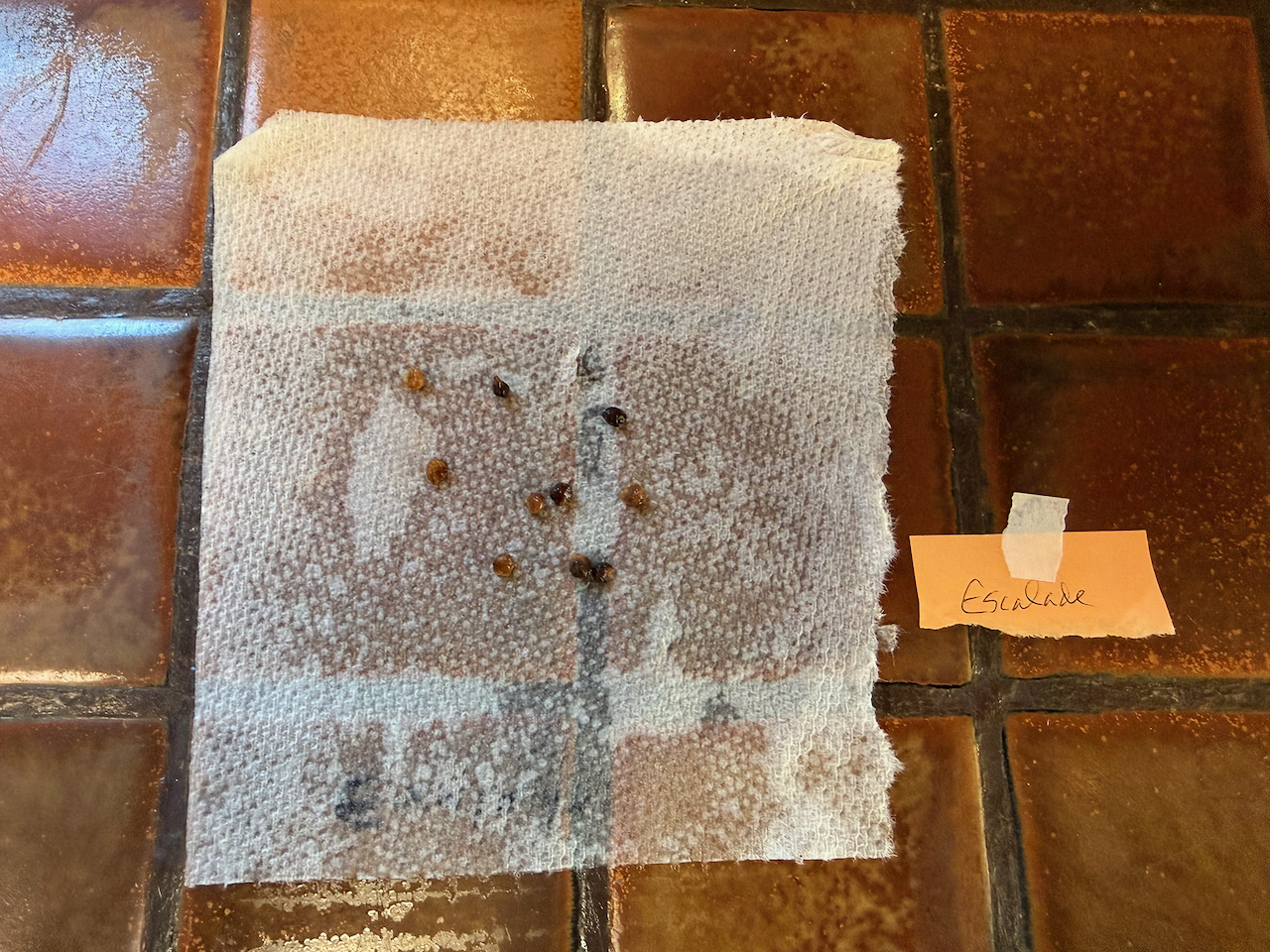
On another note, NONE of my spinach seeds germinated. So I took all four of my varieties of spinach seed packets and soaked 10 seeds in water of each variety to see if the outer coating of the seeds would softened. Why 10 seeds? Because it would tell me what percentage of the seeds would germinate-9 seeds represents 90% germination rate, 6 seeds represents 60% and so on.

After 24 hours, I put the damp seeds on damp paper towels and carefully folded them up, labeled each variety, and put them in a plastic bag to see if they would germinate. I would see a little tail of a root called a radicle if the seeds were still good. NADA. So that means the seeds are too old to germinate. Spinach seeds usually last 2-3 years and mine were 4+ years.

So I bought more fresh varieties called Bloomsfield and Space locally. I wanted Carmel and Escalade spinach seeds but couldn’t find any online (maybe Etsy or Amazon but I really don’t know if they are a reliable source-I rather stick to a known seed company or grower). So now I wait for them to germinate.